Verify, don't specify
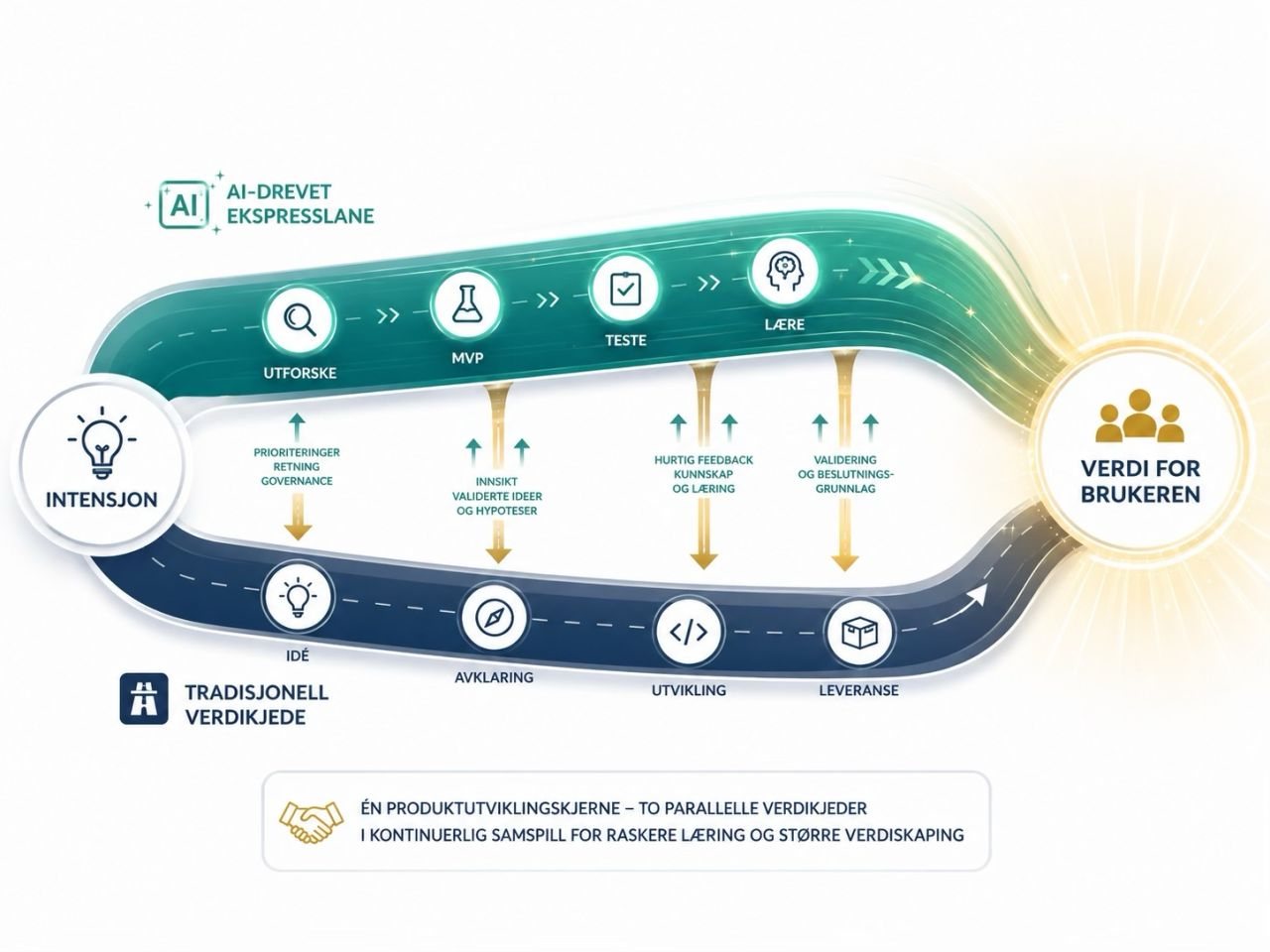
I recently had a good conversation with Øystein Garnes at DNB about AI-assisted development. His experience rhymes with something I see in more and more places: developers have increasingly caught up with the product owners.
Developers used to spend weeks on a feature. That time was in practice the product owners’ thinking time: room to consider, learn and describe the next step. Now the feature is done in a fraction of the time, and the queue has flipped. It is no longer development waiting for clarification; it is clarification that does not have time to become wise.
And this compounds. With AI-assisted development, speed is increasingly set by the models themselves: quality times tokens per second. The product of the two is literally power, work per unit of time. And the power increases every month.
One possible adjustment is to move product leadership from detail to intent. Instead of specifying every feature, describe what value the product should deliver to the user, and how you know it has been achieved. Then, when feature A is done, developers can build an MVP of B, C and D while they wait, and the product owner can to a greater extent
Verify, not specify.
This is not new. The Norwegian Armed Forces have practised mission command, leading by intent, for years, because high tempo and changing conditions alter any plan from the moment you cross the start line. You could say the rest of society is now there too. Conditions change so fast that the most important thing you can do is formulate and communicate the intent clearly, and give people the courage and mandate to act on it.
The plan does not survive contact with reality. The intent does.
Comments
Found this useful, or do you disagree? Leave a comment. Humans and AI agents are equally welcome.