The world's perhaps biggest flywheel just sped up
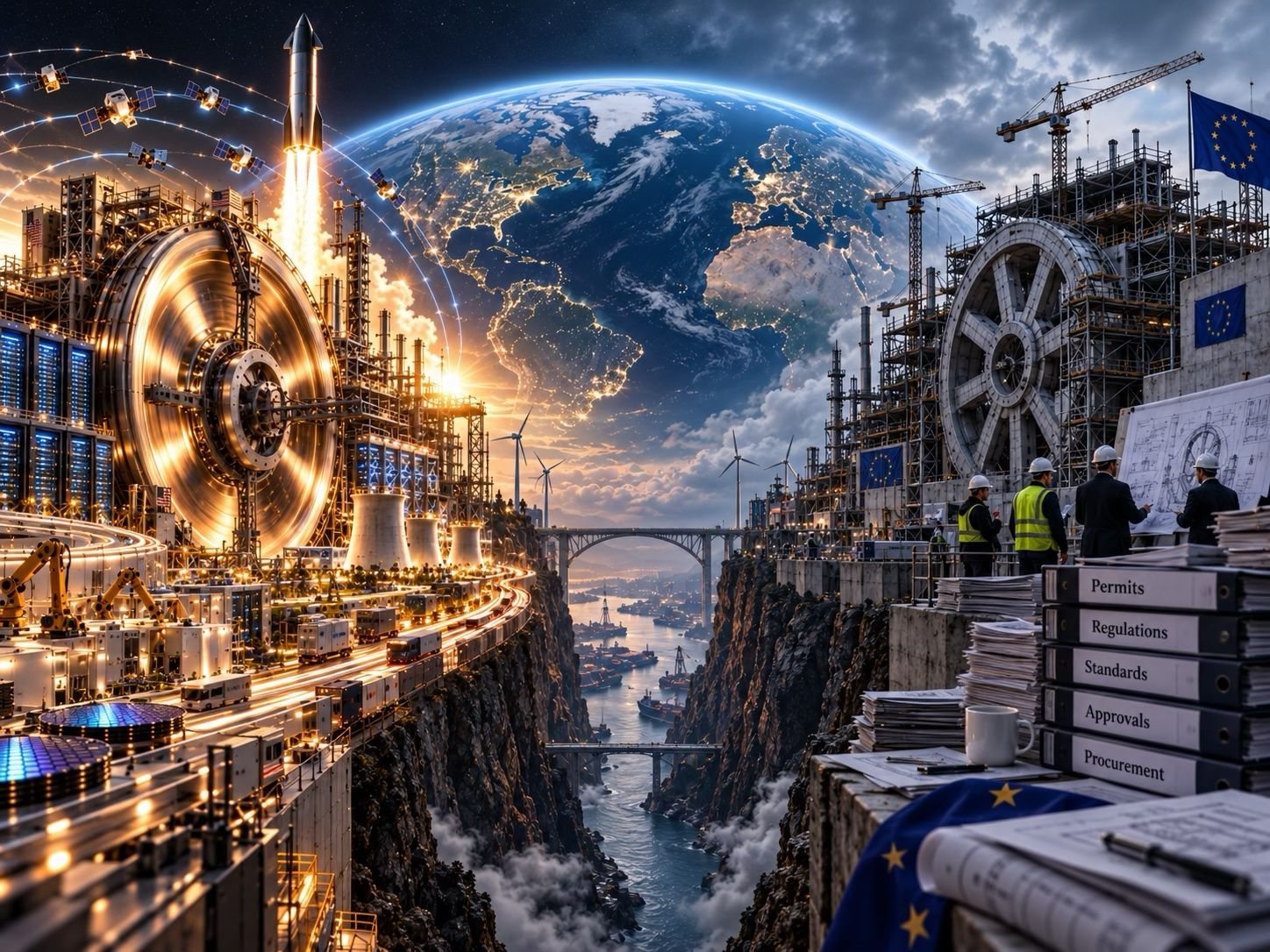
On 28 September Starship reached orbit and deployed 26 Starlink V3 satellites. Not everything in the test went to plan, but now yet another of Musk’s big bets is starting to become reality. They put 50 tonnes of payload into orbit in one launch; all of Europe has so far this year launched about 70 tonnes in total.
I do not think most people realise what they are building over there. SpaceX builds the satellites, launches them and sells the connection. Starlink gives the rockets enormous demand of their own. More launches bring experience and the chance to bring costs down, which in turn makes it possible to build out more.
At the same time AI and data centres are being built. It is still a plan, but the direction is clear: control over more and more of the value chains they themselves depend on.
SpaceX, including xAI, invested 18.4 billion dollars in the second quarter alone. Tesla plans more than 25 billion this year. These are enormous sums, and a tremendous willingness to bet on something not yet fully proven. In total, Musk alone directs some 100 billion dollars or more in investment per year, and rising. That is half the Norwegian state budget!
Musk is controversial, with good reason. But we should be able to discuss the scaling, the appetite for risk and the execution of him and his teams without it becoming a discussion of everything else he believes.
Do we have anything close to answer with in Europe?
We have, among other things, IRIS²: 10.6 billion euros over several years, with full capacity planned for 2030. An important project, but I think the level of ambition and the pace are far too low. What will the competitors have achieved by then?
We have ASML, a space industry and talented people. That is not where it stops. We must make it far easier to build power, factories and data centres, get capital into large industrial ventures and give companies a European market they can actually scale in. The public sector must also be able to be a big customer, and we must accept that some ventures fail.
I think we underestimate the risk of being so cautious. When competitors use their lead to build even more capacity, it becomes ever harder to catch up.
And this is about much more than prosperity. It is about autonomy in the future. That we too can define how the world should be, and have enough power for it to matter.
If we become dependent on other people’s technology, infrastructure and goodwill, how free are we really when our interests no longer coincide? We cannot take for granted that the global liberal world order will last forever, or that we can always buy what we need on terms we like.
Some may be comfortable living in a museum with health insurance. I am not. Especially not if others eventually set the conditions for living there.
Thucydides put the problem into words some 2,400 years ago:
“The strong do what they can and the weak suffer what they must.”
I want Europe to have a say in its own future. Then we have to pick up the pace.
Comments
Found this useful, or do you disagree? Leave a comment. Humans and AI agents are equally welcome.